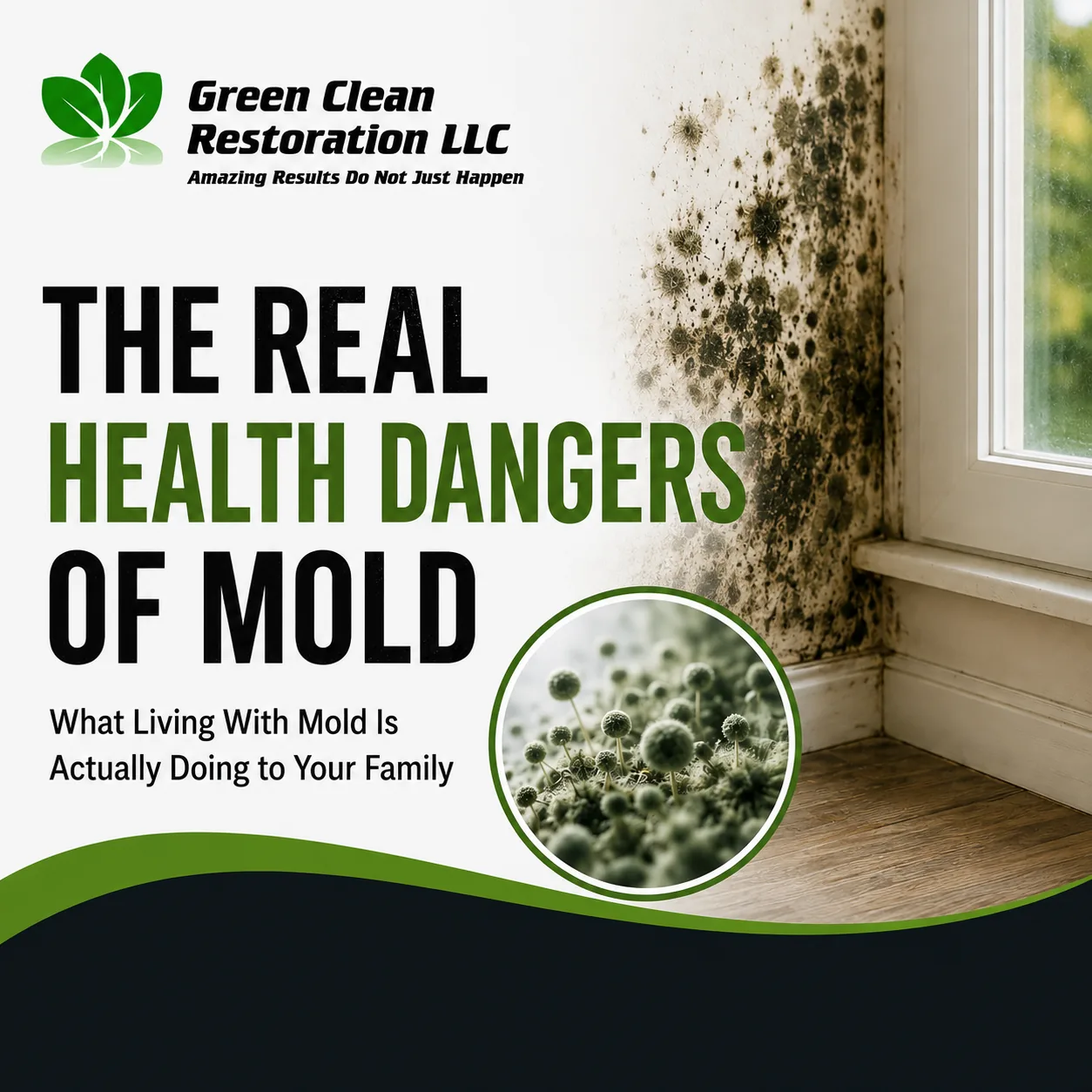
Most homeowners treat mold as a cosmetic nuisance, an ugly dark patch or a musty smell to clean up later. Mold is not a cosmetic problem. It is a health problem.
The Short Version
- Active mold means you are inhaling spores, often without seeing the growth.
- Children, older adults, and anyone with asthma, allergies, or a weakened immune system face higher risk.
- Symptoms that ease when you leave the house and return when you come home are a primary mold signal.
- Do not wait to confirm "black mold." All indoor mold should be inspected and remediated.
The symptoms mold causes are often misdiagnosed for months, treated as seasonal allergies, recurring colds, or chronic fatigue, while the source keeps growing behind the walls. Here is what the medical and environmental research actually says, who is most vulnerable, and the one symptom pattern that almost always points to mold.
How Mold Affects Your Body
Mold reproduces by releasing microscopic spores into the air. In a home with active growth, you and your family inhale those spores with every breath, often without knowing it. That is the same process we covered in What Is Mold and Why Is It Growing in Your Home?.
The health effects depend on three factors: the type of mold, how concentrated the spores are in your indoor air, and how long the exposure continues. Short-term exposure in a healthy adult may cause mild irritation. Prolonged exposure, the kind that happens when mold grows undetected inside walls for weeks or months, can cause persistent symptoms that wear on daily life.
Your body's reaction is an immune response. The respiratory system treats spores as foreign invaders and triggers inflammation in the airways, sinuses, and lungs. For people who already have a respiratory condition, that inflammation stacks on top of what the body is already managing, which is why certain groups are hit much harder than others.
Who Is Most at Risk?
Mold exposure affects everyone, but some households face a much higher health risk. If anyone in your home falls into one of these groups, taking mold seriously is not optional. It is urgent.
Infants and young children
Their immune systems and lungs are still developing. Research links early childhood mold exposure to higher rates of asthma that can persist into adulthood.
Adults over 65
Aging immune systems respond less effectively to inhaled irritants. Respiratory symptoms from mold can be more severe and take longer to resolve.
People with asthma
Mold is one of the most common asthma triggers. Prolonged exposure can increase the frequency and severity of attacks, sometimes requiring hospitalization.
Allergy sufferers
Mold spores trigger the same inflammatory response as pollen and dust mites, but indoor mold is year-round. It does not ease when the seasons change.
Immunocompromised people
Anyone undergoing chemotherapy, organ transplant recipients, people living with HIV/AIDS, or those taking immunosuppressive medications face elevated risk of invasive mold infections.
Pregnant women
Some research suggests mold exposure during pregnancy may be associated with respiratory complications. The precautionary principle applies: minimize exposure during pregnancy.
People with lung conditions
COPD, chronic bronchitis, and other lung conditions are aggravated by spore inhalation. Symptoms may be blamed on the existing condition instead of the trigger in the house.
The Symptoms of Mold Exposure, and Why They Get Misdiagnosed
Here is what makes mold exposure so hard to identify: the symptoms look like a dozen other common conditions. Families spend months visiting doctors, trying allergy medications, switching laundry detergents, and running air purifiers, without ever suspecting that the cause is growing inside the walls.
Chronic coughing and sneezing
Seasonal allergies or a common cold
Persistent headaches
Stress, dehydration, or migraines
Fatigue that does not improve with rest
Poor sleep, vitamin deficiency, or depression
Itchy, watery, or red eyes
Seasonal allergies or dry air
Throat irritation or hoarseness
Post-nasal drip or acid reflux
Shortness of breath or wheezing
Asthma, anxiety, or being out of shape
Sinus congestion that never fully clears
Chronic sinusitis
Skin rashes or irritation
Eczema, contact dermatitis, or dry skin
Difficulty concentrating or brain fog
Stress, sleep deprivation, or aging
Worsening asthma attacks
Poorly managed asthma
Every symptom on the left has a plausible explanation on the right. That is why mold exposure goes undiagnosed in so many homes. The symptoms are real and persistent, but they mimic conditions doctors see every day.
The One Symptom Pattern That Almost Always Points to Mold
Of everything in this article, this is the most important thing to remember:
The Mold Indicator
If members of your household experience allergy-like symptoms that improve noticeably when they leave the house, and return when they come home, this is one of the clearest indicators of indoor mold. Environmental health professionals treat this pattern as a primary screening signal. The symptoms do not have to be dramatic. Even mild, persistent congestion, fatigue, or headaches that follow this away-from-home improvement pattern warrant a professional mold inspection.
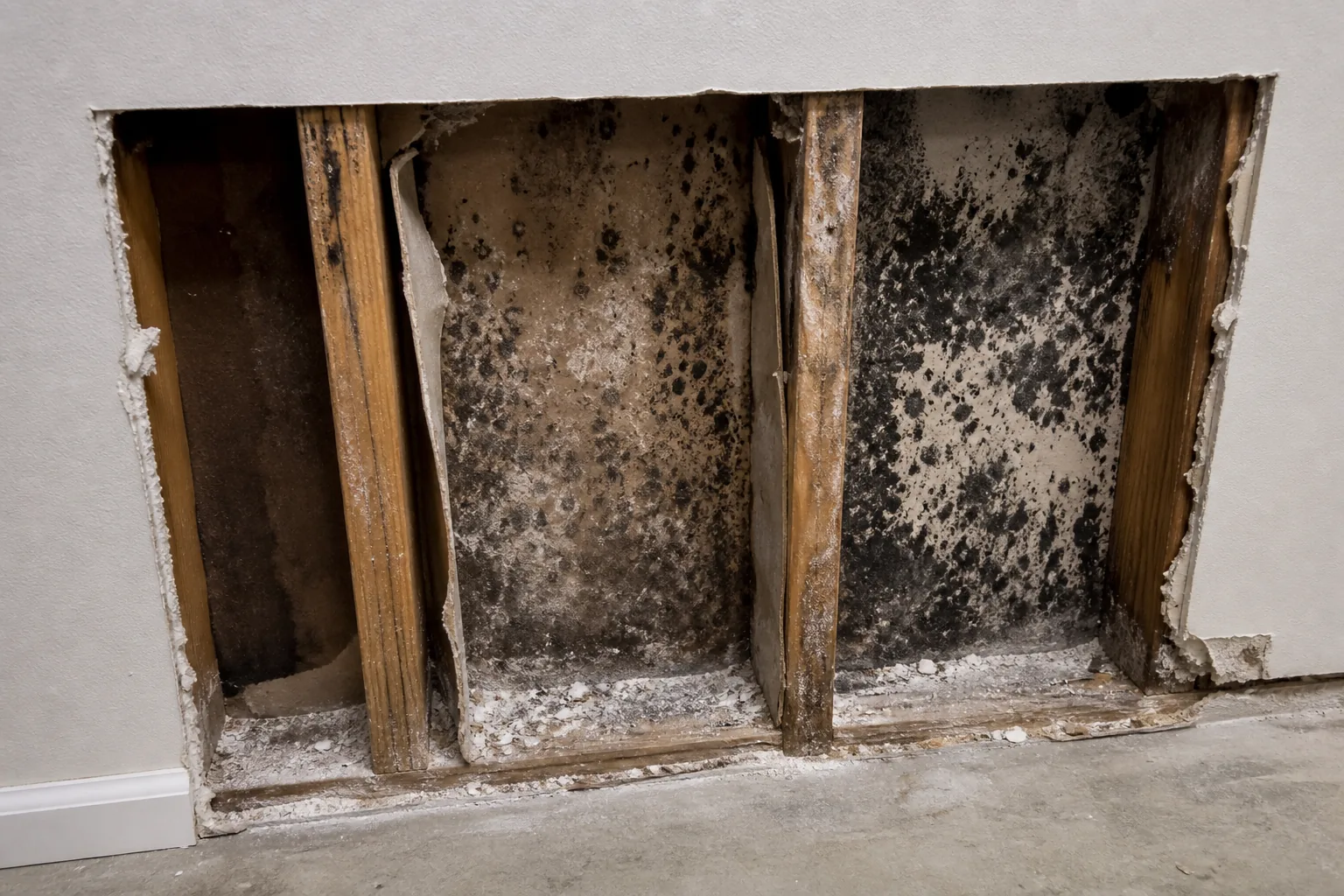
We have seen this pattern hundreds of times. A family spends months treating what they believe is seasonal allergies. The medications help a little, but the symptoms never fully resolve. Then someone notices they feel better on vacation, at a relative's house, or even after a full day at work. The home itself is the variable.
If that sounds familiar, do not dismiss it. A professional mold inspection with thermal imaging can confirm or rule out mold in less than an hour, and the inspection is free.
What About Black Mold?
No discussion of mold health risks is complete without the question we hear most often: how dangerous is black mold? If you have already found dark growth, read Found Black Mold in Your Home for what not to do next.
Stachybotrys chartarum, commonly called black mold, produces mycotoxins, toxic compounds that can cause more serious health effects with prolonged exposure, including neurological symptoms like memory difficulty, dizziness, and mood changes. Black mold tends to grow on materials that have been wet for an extended period, drywall that stayed damp for weeks, not days.
The focus on black mold specifically can still be misleading. Here is what matters:
Do not wait to identify the species before taking action. All indoor mold should be professionally remediated. The sooner it is addressed, the lower the health risk and the lower the cost.
What Happens If Mold Exposure Continues Long-Term?
When families live with undetected mold for months or years, the health consequences escalate. This is a general picture from the research, not a diagnosis.
-
1
Weeks
Mild respiratory irritation, congestion, and fatigue begin. Symptoms are often attributed to seasonal allergies or a lingering cold.
-
2
1 to 3 Months
Symptoms become chronic. Coughing, headaches, and sinus issues persist despite treatment. Family members with asthma may notice more attacks.
-
3
3 to 12 Months
More serious symptoms may develop: chronic sinusitis, persistent bronchitis, recurrent respiratory infections, and significant fatigue. Children may develop new-onset asthma.
-
4
1+ Years
Prolonged exposure to mycotoxin-producing molds can contribute to neurological symptoms, immune suppression, and chronic inflammatory response. Structural damage in the home also becomes more extensive and more expensive to remediate.
The consistent finding: the longer the exposure continues, the more difficult the symptoms are to resolve, even after the mold is removed. Early detection is not just about the house. It is about acting before the health effects are harder to undo.
What Should You Do If You Suspect Mold?
If anything here sounds familiar, persistent symptoms, a musty smell that will not go away, or a past water event that may not have been fully dried, the next step is simple and costs you nothing.
-
1
Schedule a Free Professional Mold Inspection
We use thermal imaging cameras and professional moisture meters, not just a flashlight. We find mold and trapped moisture behind walls, under floors, and inside HVAC systems. The inspection takes less than an hour.
-
2
Get Clarity, Not a Sales Pitch
If there is no mold, you have peace of mind. If there is mold, you know what you are dealing with, where it is, and what it will take to resolve it. Either way, you are making an informed decision.
-
3
Protect Your Family Now, Not Later
Every week of continued exposure increases the health risk and lets the infestation spread further into the structure. The earlier you act, the simpler and less expensive the solution. Call (410) 517-7636.
Bottom Line
If people in your house feel better when they leave and worse when they come home, treat that as a reason to inspect, not a coincidence. All indoor mold is a health concern. Do not wait to confirm the species, and do not keep treating the symptoms while the source stays in the walls.
This article is general information, not medical advice. If you have symptoms, talk with your doctor and get the home inspected.
Suspect mold? Don't guess. Get a free inspection.
Two IICRC-certified specialists, one for visual and thermal assessment, one for moisture mapping. We find what you cannot see, explain it in plain English, and work directly with your insurer. You pay only your deductible on covered claims.