
Most standard homeowners policies cover water damage that is sudden and accidental, like a burst pipe or a washing-machine hose that fails overnight. They typically exclude slow leaks, flooding, and damage tied to poor maintenance.
The Short Version
- Sudden, accidental water damage is often covered. Gradual leaks and floods usually are not.
- Flooding from rain, storm surge, or groundwater generally needs a separate flood policy.
- Sewer and sump backups are frequently optional add-ons, not part of a standard policy.
- This is general information, not a substitute for your policy or a licensed agent.
Insurance companies generally draw a line between two types of water damage. That line, more than how much water is on the floor, is what usually decides whether a claim is paid. Coverage details vary by insurer and by policy, so treat what follows as a field guide, not a guarantee.
The General Rule: Sudden vs. Gradual Damage
Often covered
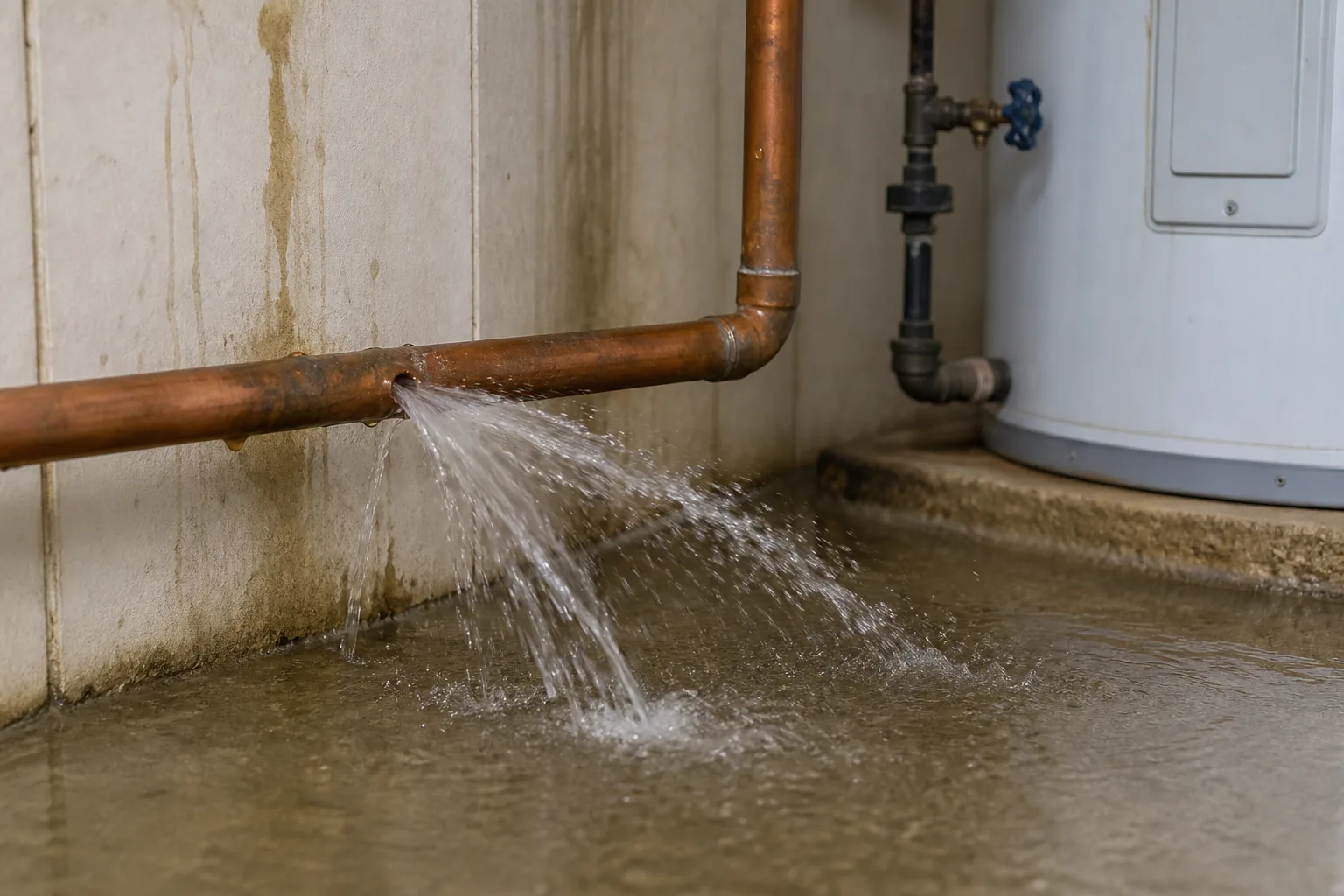
A pipe bursts overnight, an appliance hose fails, or a storm blows a window open and rain gets in. These events are unexpected, and many standard policies extend coverage to the resulting damage and cleanup.
Often excluded
A slow leak behind a wall that goes unnoticed for months, deteriorating pipes, or damage tied to lack of upkeep. Insurers often treat this as a maintenance issue, on the assumption a homeowner could have caught it sooner.
What's Commonly Excluded
Certain causes of water damage typically fall outside a standard homeowners policy and require a separate policy or an endorsement, including:
Why This Matters in Baltimore, Harford, Howard, and Carroll Counties
Local weather and housing stock make this a live question. Older homes in Baltimore County and Howard County often have aging plumbing that is more prone to gradual leaks. Parts of Harford and Carroll County see seasonal heavy rain and stream flooding that blur the line, in a homeowner's mind, between "water damage" and "flood," even when the policy treats them as different events. Basement flooding, sump pump failures, and ice-related pipe bursts are also common during Maryland's winter freeze-thaw cycles. Because terms differ from one insurer to the next, review your declarations page or call your agent before the next storm, not after.
Steps to Take If You Experience Water Damage
If water is already in the house, coverage is only part of the problem. Standing moisture starts a second clock: mold can begin within 24 to 48 hours.
-
1
Stop the Source, If It Is Safe
Shut off the water at the main and move valuables to dry ground only if you can do it safely. If the water is near electrical or looks contaminated, wait for help.
-
2
Document Everything Before Cleanup
Photograph and video the water, the source if you can see it, and damaged contents before anything is moved. This record is what your insurer and a restoration crew both need.
-
3
Contact Your Insurance Provider Promptly
Call your carrier so you understand your coverage and the claims process. You do not have to wait for an adjuster before drying starts. Policies generally expect you to limit further damage.
-
4
Keep Records of Every Cost and Conversation
Save receipts, repair notes, and a log of who you spoke with. Those records support the claim and prevent gaps if hidden damage turns up later.
-
5
Bring In a Restoration Professional Quickly
Fast extraction and drying limit further loss. Green Clean Restoration, based in Parkton, MD, works with homeowners throughout Baltimore, Harford, Howard, and Carroll counties on water damage cleanup and mitigation. We dispatch two IICRC-certified specialists within 30 minutes, document the loss with Xactimate, and work directly with your carrier: (410) 517-7636.
Bottom Line
Water damage coverage under a homeowners policy depends on the cause of the damage and the specific terms of that policy. The only way to know exactly what is covered is to review your declarations page or talk with your insurance agent. This article is general information. It is not legal or insurance advice.
Have questions about protecting your home? Consult a licensed insurance agent in your area to review your specific policy and coverage options.
Water in the house? Don't wait on the paperwork.
Two IICRC-certified specialists arrive within 30 minutes. We extract the water, dry the structure, document the loss with Xactimate, and work with your insurer. You pay your deductible on covered claims.